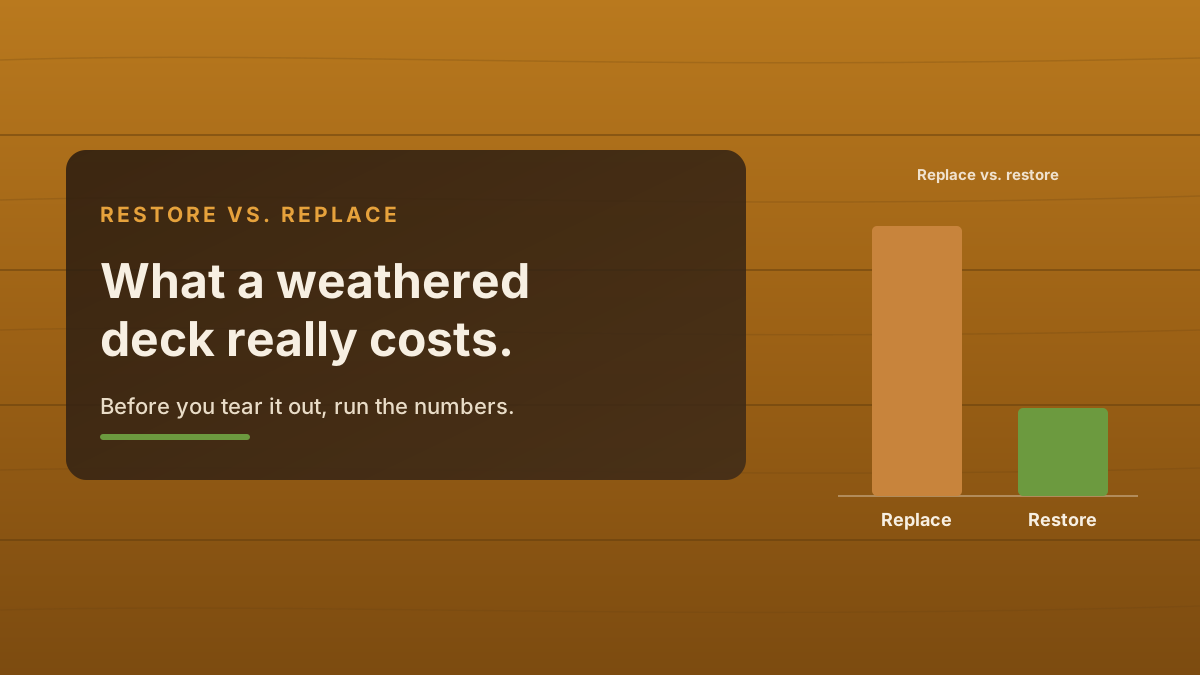

When a deck goes gray and rough, the first instinct is often to rip it out and start over. It is worth pausing before you do. Replacement is the most expensive option on the table, and for a lot of decks it is not the necessary one.
What replacement really involves
Tearing out and rebuilding a deck means demolition, hauling, new lumber or composite, fasteners, and labor. That is why full replacements climb into the thousands quickly. You are paying to remove wood that, in many cases, is still structurally fine. You are also losing the use of your deck for the length of the project.
Replacement makes sense when the structure has failed. Soft, spongy boards, widespread rot, or compromised framing are real reasons to rebuild. No surface treatment fixes a deck that is coming apart.
What restoration involves
Restoration works with the wood you already own. If the boards are sound and the problem is color, grime, and that rough gray surface, a clean and brighten resets the wood at a fraction of the cost and time.
The Wood WOW two-step system is built for exactly this:
- Step 1 Restore lifts out dirt, mildew, algae, and the gray weathered layer.
- Step 2 Brighten neutralizes and resets the wood’s natural color to a bright, even finish.
You keep your deck, you keep your weekend mostly intact, and you spend a lot less.
A quick way to decide
Ask two questions:
- Is the structure sound? Walk the deck. If the boards are firm and the framing is solid, restoration is on the table. If you find soft spots or rot, price out repair or replacement.
- Is the problem really the surface? Gray, dull, rough, and dirty are surface problems. That is what a two-step restoration is designed to solve.
If the answers are yes and yes, restoration is almost always the smarter first move.
The honest bottom line
Not every deck can be saved, and we will never tell you otherwise. But a large share of the decks people assume are finished are simply weathered on top. Restoring them costs a fraction of replacement, takes a fraction of the time, and often looks just as good as new wood once it is done and sealed.
Before you spend on a rebuild, it is worth trying the two steps first.